

Ancient and Early History of Chitradurga District
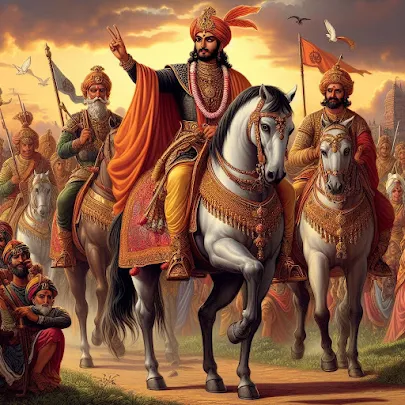
Chitradurga District, located in the heart of Karnataka, has a rich history that stretches back thousands of years. The district’s rugged granite hills, natural rock formations, and ancient caves provide evidence of human habitation since prehistoric times. Archaeological discoveries, including stone tools, rock shelters, and megalithic burial sites, indicate that early communities lived in this region during the Stone Age and Iron Age.During the early historic period, Chitradurga came under the influence of several prominent South Indian dynasties. The Satavahanas were among the earliest rulers to influence the region, followed by the Kadambas, Gangas, Chalukyas of Badami, and the Rashtrakutas, who contributed to the area’s cultural and architectural development. Their rule encouraged the construction of temples, irrigation systems, and trade routes that supported the local economy.From the 10th to the 13th centuries, the Hoysala Empire extended its influence over parts of the district, leaving behind remarkable examples of temple architecture and artistic heritage.
Chitradurga District, Karnataka
Chitradurga District is one of the most historically and culturally significant districts in Karnataka, located in the central part of the state. Known as the “Fort City of Karnataka,” the district is renowned for its majestic granite hills, ancient monuments, rich heritage, and breathtaking landscapes. Chitradurga has played an important role in Karnataka’s history and is closely associated with the legendary bravery of Onake Obavva, who defended the famous Chitradurga Fort against enemy forces. Today, the district attracts thousands of visitors every year for its historical monuments, religious sites, natural attractions, and vibrant local culture.The district headquarters is Chitradurga City, which serves as the administrative, commercial, and cultural center of the region. Chitradurga is well connected to Bengaluru, Davanagere, Shivamogga, Ballari, and other major cities by road and rail, making it easily accessible for tourists and business travelers.
Major Towns and Population Details

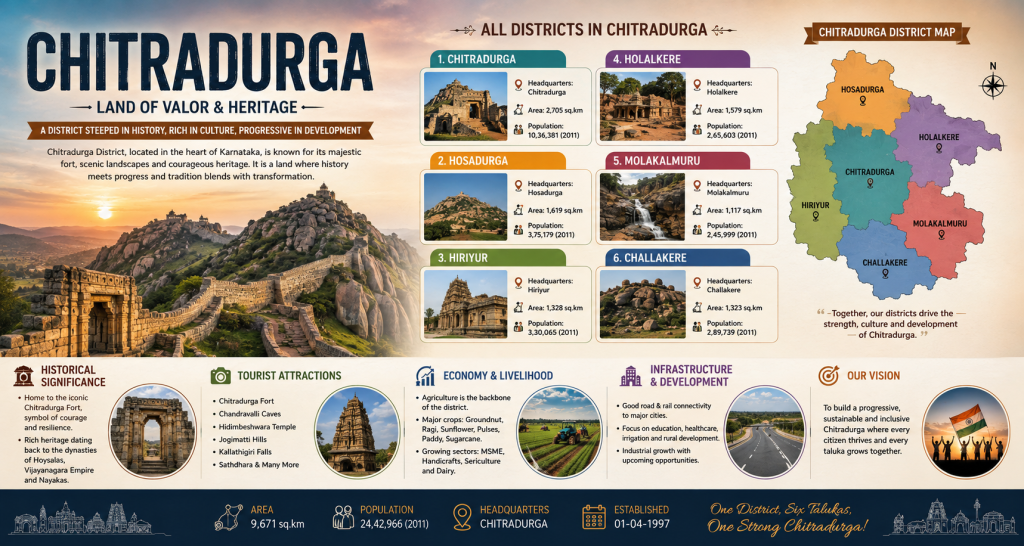
Chitradurga District is home to several important towns that contribute significantly to its administration, economy, culture, and tourism. Chitradurga City, the district headquarters, is the largest urban center and is renowned for the historic Chitradurga Fort, educational institutions, government offices, and commercial activities. Hiriyur is a major agricultural and business hub, known for the scenic Vani Vilas Sagar Dam and its thriving markets for crops such as groundnut and cotton. Challakere, often referred to as the “Science City of Karnataka,” has gained prominence due to its defence and scientific research establishments, alongside a strong agricultural economy.
Important Town in Chitradurga Distric
Chitradurga District is home to several important towns that play a vital role in the district’s administration, economy, culture, and tourism. Each town has its own unique identity and contributes to the overall development of the region.Chitradurga District is home to several important towns that contribute to its administration, economy, and cultural heritage. Chitradurga is the district headquarters and is famous for the historic Chitradurga Fort. Hiriyur is known for the Vani Vilas Sagar Dam and agricultural trade, while Challakere is recognized as Karnataka’s “Science City” due to its defence and research institutions. Holalkere and Hosadurga are important agricultural and commercial centers, and Molakalmuru is renowned for its traditional handwoven Molakalmuru Silk Sarees. Together, these towns play a key role in the district’s development, tourism, and economy.

Economy of Chitradurga
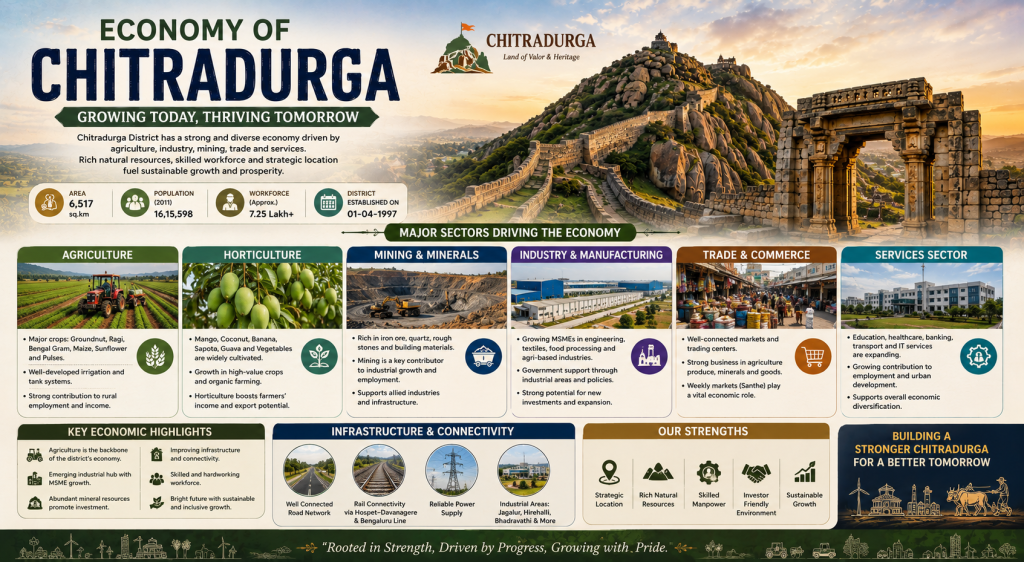
Chitradurga District has a diverse economy driven by agriculture, horticulture, animal husbandry, mining, textiles, tourism, and small-scale industries. Agriculture is the primary occupation, with farmers cultivating crops such as ragi (finger millet), maize, groundnut, sunflower, cotton, jowar, and pulses. Horticultural crops including mango, pomegranate, coconut, and vegetables also contribute significantly to rural incomes.The district is well known for sheep and goat rearing, dairy farming, and poultry, which provide additional livelihood opportunities. Molakalmuru is famous for its handwoven Molakalmuru Silk Sarees, making the textile and handloom sector an important part of the local economy.Chitradurga is rich in natural resources, and granite quarrying, mining, and mineral-based industries contribute to industrial growth and employment.
Geography and Natural Features
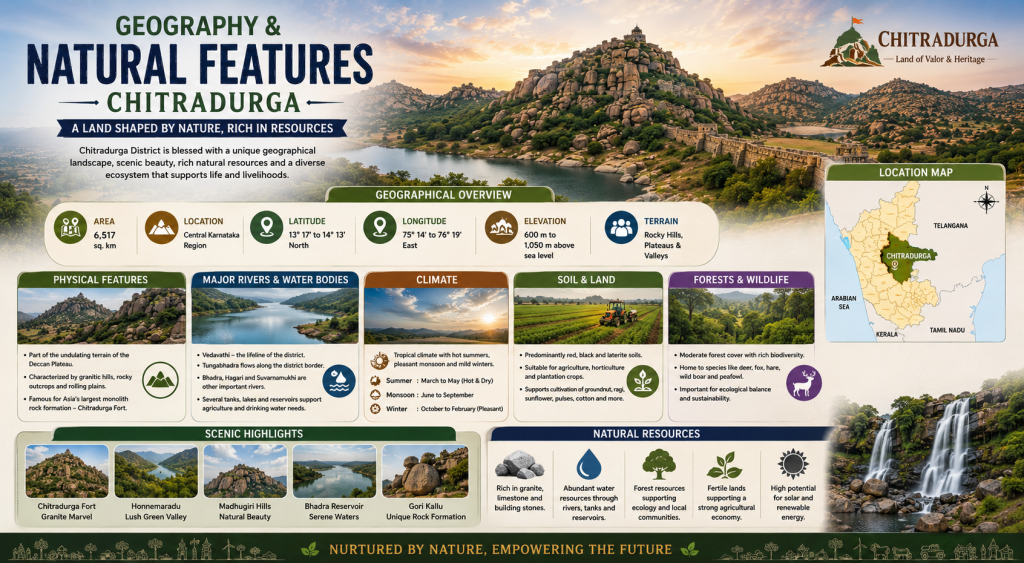
Chitradurga District is located in the central part of Karnataka and covers an area of approximately 8,436 square kilometres. The district is characterized by its rugged terrain, rolling plains, and massive granite hill ranges, which have earned it the nickname “Land of Stone Forts.” It shares its boundaries with Davanagere, Ballari, Vijayanagara, Tumakuru, Chikkamagaluru, and Shivamogga districts.The district has a semi-arid tropical climate, with hot summers, moderate monsoon rainfall, and pleasant winters. Average annual rainfall ranges between 500 and 700 mm, supporting agriculture and groundwater recharge. The main rivers flowing through the district include the Vedavathi (Hagari) and Tungabhadra river systems, while several streams, tanks, and reservoirs provide irrigation. Vani Vilas Sagar Dam, built across the Vedavathi River, is one of Karnataka’s oldest and most important reservoirs.
Climate and Natural Features

Chitradurga District experiences a semi-arid tropical climate, characterized by hot summers, moderate monsoon rainfall, and pleasant winters. Summer lasts from March to May, with temperatures ranging between 30°C and 40°C, while winter, from November to February, is cool and comfortable, with temperatures ranging from 15°C to 28°C. The district receives an average annual rainfall of 500–700 mm, mainly during the southwest monsoon season from June to September.The district is famous for its granite hills, rocky landscapes, and unique geological formations, which give it a distinctive natural beauty. These massive rock formations provide the foundation for the historic Chitradurga Fort, one of India’s finest hill forts. Chitradurga also features rolling plains, natural valleys, caves, and scattered hill ranges that enhance its scenic appeal.